
A year filled with wars, protests, strikes, and resistance is upon us. The world is drifting into a period defined by fierce competition, protectionism, and conflict. In Syria, the collapse of the old regime has ushered in a new era of uncertainty. While the political gains of the Kurds are being dismantled, there is a risk of a new Islamist regime, allied with US imperialism and at peace with Zionism and Israel, rising on our borders. In Turkey, the deepening economic crisis has engulfed all areas of social life. The Palace is escalating its violence as it fails to generate consent. Although strikes and resistance have increased recently, the current level of organization is insufficient to create a systemic rupture. The socialist movement needs a more coherent struggle and to take root within the working class.
Marxism Now! Editorial Board / 21 January 2026
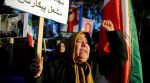
The year 2026 began amid rising popular uprisings in Iran against poverty and a religion-based authoritarian regime. At the same time, Russia threatened Europe with war, while China intensified its military exercises around Taiwan. In Turkey, debates continued over the reactivation of radical jihadist networks, while the U.S. administration reshaped the global agenda through military moves in Latin America. Following the operation in Venezuela, threats directed at Colombia and Cuba—together with statements concerning Greenland—further escalated global tensions.
As a new world order emerges, the United States is struggling to maintain its former unipolar dominance. Seeking to reinforce its military and economic power, Washington no longer wants to shoulder NATO’s burden alone; instead, it demands harsh conditions from its allies while redistributing that burden. The European Union is drifting amid deep mistrust. China, while making tactical retreats in certain regions, remains determined to sustain its global influence. Israel, meanwhile, is attempting to reshape not only the Middle East but also the Eastern Mediterranean; through military cooperation with Cyprus, Greece, and Egypt, it is forming a new balance of power that increasingly encroaches on Turkey’s borders.
This picture offers a strong indication of how the new year is likely to unfold. A year filled with wars, protests, strikes, and resistance lies ahead. From U.S.–China rivalry to the occupation of Ukraine; from Gaza to conflicts across Africa; from the rise of the far right in Europe to the rapid plunder of the planet and the millions forced onto migration routes—we are living in a world where multiple crises overlap. For financial funds and a small number of technology monopolies, this system continues to grow; for the vast majority of people, it signifies deep devastation. Artificial intelligence and new technologies are emerging not as tools for humanity’s collective benefit, but as instruments of war and surveillance. The world is being pushed into an era defined by harsh competition, protectionism, and conflict.
The Search for a New Order in Syria
With the collapse of the former regime in Syria, a new period of uncertainty has begun. The process has deepened through ethnic and sectarian attacks, with different communities becoming targets. Israel, invoking security concerns and the protection of minorities, has continued its advance toward Damascus. Hayat Tahrir al-Sham (HTS), led by Ahmed al-Shara, is attempting to reorganize its relations with imperialist powers and regional actors. While negotiations between the new administration in Damascus and armed forces in the north have been discussed, HTS launched attacks on Kurdish positions in Aleppo in recent weeks—effectively ending the talks held on March 10.
Turkey has long pursued a policy of dismantling the autonomous administration in Rojava along its border and subordinating it to the Damascus government, and recent developments indicate that this objective is being realized. The situation in Syria requires more comprehensive analysis; however, the current picture shows that Kurdish political gains are under severe attack. In the past, some Arab tribes that paid a heavy price in the fight against ISIS had joined the SDF front. Today, with shifting balances of power, they have turned toward the Shara administration backed by Saudi Arabia, the U.S., and Turkey. A significant portion of these tribes act on nationalist reflexes, reject political power-sharing with the Kurds, and—above all—demand more financial resources. Regional and international actors have played a decisive role in this shift. Saudi Arabia appears to have convinced Trump that Ahmed al-Shara can unify Syria and serve as a U.S. ally.
Under pressure from the Damascus government and imperialist powers, SDF forces are being compelled first to withdraw east of the Euphrates and then to integrate into the central structure. The U.S. has made its position clear: “Shara is now our man, and we are done with the SDF.” This new situation means the loss of oil revenues and strategic territories for the Kurds. Control over energy resources has shifted to tribal forces, with expectations that the central government will eventually assume control. The agreements envision the individual integration of armed forces into the central army and the retention of only a limited local security structure. This represents a scenario far removed from earlier debates on autonomy. In practice, the arrangements amount to the liquidation of the autonomous structure. The new balances supported by the U.S. and Gulf states carry a strong potential to generate further instability in the region. There is a real risk of a new Islamist government allied with U.S. imperialism rising on Turkey’s borders.
Turkey: Economic Collapse and Social Disintegration
In Turkey, a deepening economic crisis has engulfed all aspects of social life. As the hunger threshold rises rapidly, incomes in major cities can no longer cover housing costs. The food and housing crises have become the defining elements of daily life. Broad segments of society—from factory workers to office employees, from small shopkeepers to youth and retirees—are living under the intense pressure of poverty. Child labor is spreading, and nearly one hundred child workers have lost their lives in workplace accidents. Credit card debt has reached record levels, and poverty is spreading toward city centers. Meanwhile, due to inflation and continuous wealth transfers to capitalists, the proportion of people living in poverty has reached nearly 80 percent.
Social fragmentation and violence are deepening. Violence against women and children is increasing, while drug trafficking and street gangs are spreading in working-class neighborhoods. Lack of organization further empowers these structures. Energy, arms, and construction capital oligarchies are intertwined with the justice and security bureaucracy and organized crime networks. Media ownership changes, pressure, and violence against journalists are further weakening independent journalism. Lawlessness and decay are reflected everywhere. News of illegal betting, money laundering, stock market manipulation, and drug trafficking never ceases. Palace infighting remains contained within the palace—for now. Money and power shift from one hand to another. The judiciary hears nothing, sees nothing, touches nothing.
Prisons are filled with political prisoners. Despite meeting release conditions, many remain incarcerated; detainees facing serious health risks and continued imprisonments in defiance of high court rulings demonstrate that the rule of law has entirely collapsed. Pressure on journalists, politicians, and local officials shows how rapidly the democratic space is shrinking. As the palace regime fails to manufacture consent, it intensifies repression.
Facing rising poverty and regional developments, the regime is prioritizing security-based policies. As elections approach, conservative rhetoric is likely to harden, and pressure on social life will increase. Under the banner of “family” policies, interventions targeting different lifestyles are expanding. This atmosphere also serves to render class struggle and labor demands invisible. We can already see that repression against the labor movement and democratic organizations will intensify in the coming period. We will need to strengthen our defensive positions against attacks on women, children, nature, animals, and all forms of life.
While the regime avoids confrontation with the U.S. and Israel, it cannot sustain its balancing policy with Russia and China indefinitely. Although it has secured U.S. consent in Syria for now, whether this will continue in the medium term remains uncertain. NATO’s 2026 summit will be held in Turkey. We can anticipate active regional maneuvering aimed at strengthening its position ahead of the summit. While socialists and the working class will take to the streets to build an anti-imperialist line, capital will work toward deeper collaboration with imperialism.
In the renewed discussions on the Kurdish question, no concrete steps have yet been taken. The regime seeks an agreement with the Kurds without making serious concessions. In debates over a new constitution, they may offer limited constitutional concessions and release some prisoners, but little more appears to be on the table. Through constitutional change, the palace aims to guarantee Erdoğan’s electoral victory and to sever ties between Kurdish forces and the CHP opposition. It is too early to predict how the Kurdish political movement will respond.
Our Labor Movement
Despite everything, the potential to reverse this dark picture lies in the organized struggle of social opposition and the working class. From chemicals to metal, from municipalities to healthcare, strikes and resistance are underway. Sub Med and Temel Conta, organized under the Petroleum Workers’ Union (Petrol-İş), are on strike. The United Metalworkers’ Union (Birleşik Metal-İş) has posted strike decisions at 43 factories against the MESS employers’ association. Municipal workers are intensifying strike preparations. The palace regime protects employers and takes measures against strikes. At Temel Conta, machines have been forcibly removed and constitutional and union rights denied. At Smart Solar, bourgeois law and police force are being used to neutralize the strike. Militant unionists are under pressure.
Although strikes and resistance have increased recently, the current level of organization is insufficient to create a systemic rupture. Anger at the grassroots often fails to reach union leaderships. The government’s employer-protective stance and interventions against strikes worsen this situation. However, the convergence of struggles across different sectors could open the way for a new political and social line. This is not merely an ideological preference, but a necessity imposed by social reality.
Even if not within union centers, new, independent, and original experiences—and new militant unions—may emerge at the grassroots. The socialist movement needs a more consistent struggle and deeper roots within the working class. Press statements in city centers and online tweet campaigns contribute very little to the struggle. What is needed is for revolutionary militants to meet the working class in industrial zones. The working class must unite with militant youth, women, LGBTQ+ people, environmental and animal rights activists, and oppressed peoples.
For this reason, the question “Where Should We Begin?” will be discussed much more in the period ahead.